
9 min read · Updated October 14, 2026
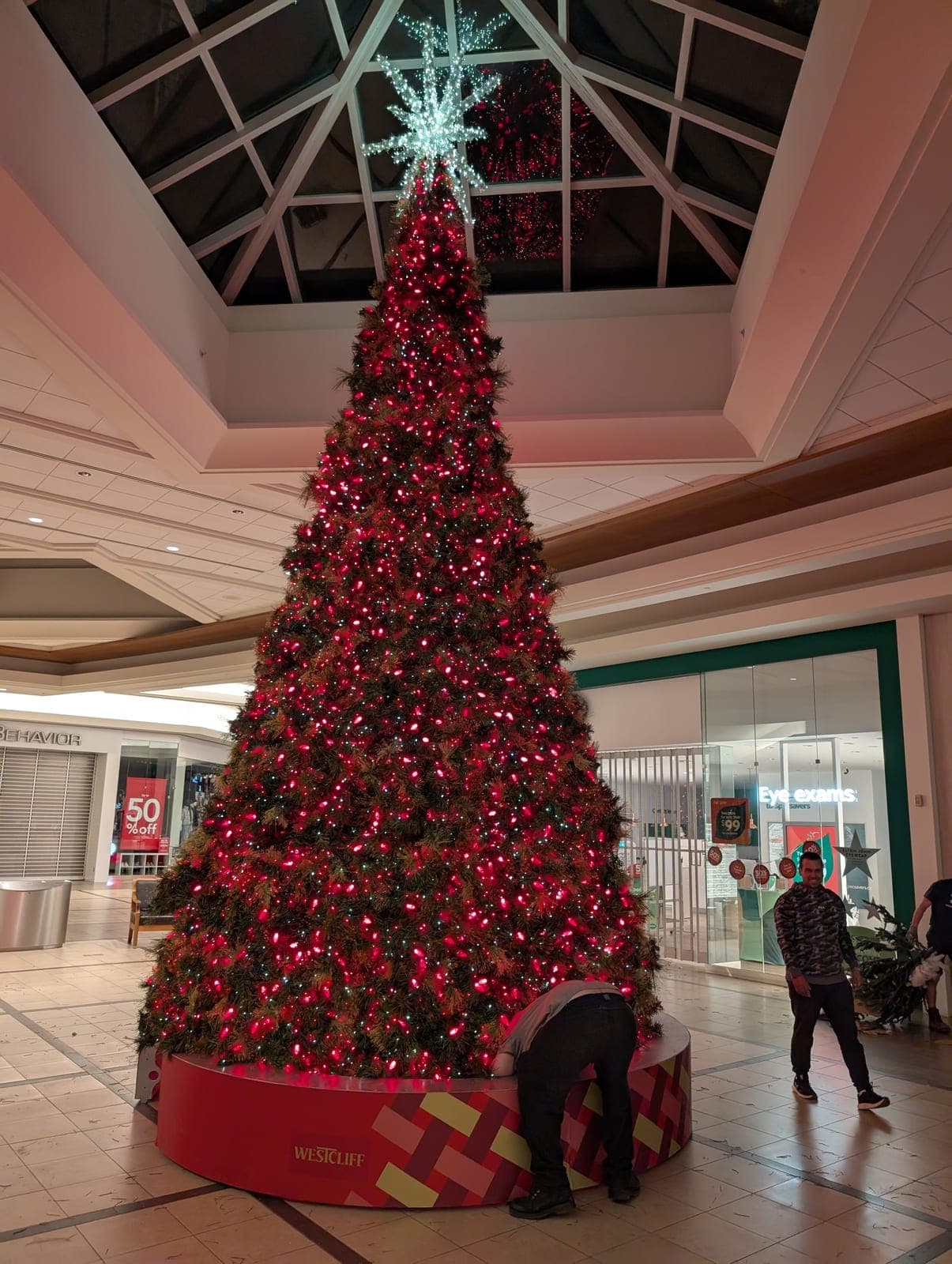
A mall display is a traffic-management project as much as a decorating one. This checklist covers atrium tree sizing, Santa set and photo-op layout, walk-through displays, fire-rated materials, lead times and how to refresh themes without rebuying everything.
Key takeaways
- 1Size the atrium tree from clear ceiling height: leave 3 to 4 ft above the topper and measure the base footprint before you choose a diameter.
- 2Plan Santa and photo-op areas around queue length and sightlines, not just the footprint of the set.
- 3Ask for fire-retardant documentation on foliage, wreaths and garland, and confirm requirements with your local fire prevention office.
- 4Order large 3D pieces and trees by early September; stock decor can follow in October.
- 5Build a neutral core of trees, garland and lights, then rotate theme pieces each year to keep the display fresh.
For a shopping centre, the holiday display has two jobs: it sets the mood for the season, and it moves people. A tree in the wrong place blocks a corridor, a Santa queue that spills across an entrance stalls tenants, and a walk-through display that is too narrow creates a bottleneck in the busiest week of the year. This checklist walks through the decisions in the order most centre managers need to make them, with the numbers that matter at each step.
Step 1: measure the building before you pick a single product
Start with a floor plan and a site walk. Decor decisions follow from a short list of measurements, and each one should be written down and signed off by your operations team.
- Clear ceiling height at the atrium, including sprinklers, signage and skylight frames, not just the ceiling itself.
- Floor footprint available for the tree base, plus 3 ft of clearance on all sides for access and safety.
- Door and elevator dimensions along the delivery route, because tall pre-lit trees ship in sections and large 3D pieces ship on pallets.
- Power available at the atrium floor and at ceiling level, with circuit capacity and who controls the panel.
- Floor load rating for anything heavy, especially if the display sits above a parking level.
Step 2: size the atrium tree by ceiling height
The atrium tree is the most visible purchase, so size it with a simple rule: leave 3 to 4 ft of clear space above the topper and make sure the base diameter is roughly one third of the tree height or less in tight spaces. A tree should look generous but should not appear to be touching the ceiling.
- 20 ft ceiling: a 14 to 15 ft tree with topper.
- 30 ft ceiling: a 22 to 24 ft tree with topper.
- 40 ft ceiling: a 30 to 35 ft tree with topper and a lit base.
- Open multi-storey atrium: consider a 40 ft or larger tree with an engineered base and tie-offs, and ask for installation drawings.
Pre-lit commercial trees are sold in sections, which makes delivery manageable, but they still need a crew and a lift. Pair the tree with oversized ornaments, a tree topper and a lit base ring so the trunk is not a visual gap at eye level. Plan about one string of mini lights per vertical foot for an extra-dense look if you are adding to a pre-lit tree; see mini lights.
Step 3: lay out the Santa set and photo-op
The Santa set drives return visits, but it also drives crowds. Lay it out from the queue backwards.
Queue and sightlines
Estimate the peak queue at 40 to 60 people on a busy Saturday and give each person about 4 square feet of queue space; that is 160 to 240 sq ft of stanchion area, before you add the set itself. Position the queue so it does not block a store entrance, fire exit or washroom corridor, and so parents can see Santa from the queue to keep children calm.
Photo-op positioning
A lit gift box, ornament ring or polar bear works best when people can stand 6 to 8 ft back and still frame it. Leave a 10 ft by 10 ft shooting zone and avoid placing it directly in front of a store window, which creates glare. Browse photo-op displays for archways, ornament rings and character pieces.
Step 4: walk-through displays and traffic flow
A lit archway or tunnel can turn a corridor into a destination. The rule is width: keep a clear path of at least 6 ft for a one-way walk-through and 10 ft or more if the corridor is two-way, plus an accessible route around it for strollers and wheelchairs. Check the aisle width at the narrowest point after the display is in, not just on the drawing.
- Keep egress routes and fire exit signage unobstructed. Never hang decor from sprinkler piping or fire alarm devices.
- Use 24V low-voltage 3D and 2D displays with aluminum frames for stability, and anchor or weight them per the manufacturer's guidance.
- Route cords under rubber cord covers or along walls; trip hazards are the most common claim in the season.
- Walk the route at opening, mid-afternoon and closing, because crowd density changes the whole picture.
Step 5: fire safety and materials
Indoor commercial spaces are governed by the fire code and by what your insurer and local fire prevention office will accept. Ask for flame-retardant documentation for garland and wreaths, trees and any fabric or foliage, and confirm requirements with your authority having jurisdiction before you buy. Many malls require a walk-through with fire prevention before opening.
- Request flame-retardant certificates in writing, and file them with your facilities records.
- Keep real trees and untreated materials out of enclosed areas unless your fire authority approves them.
- Use LED lighting wherever possible; it runs cooler and draws far less current.
- Check that all pieces suitable for walk-through use are low-voltage and that wiring is protected from foot traffic.
Step 6: coordinate with tenants, security and cleaning
The display touches every department, and problems usually arise from teams who were not told. Hold a short pre-season meeting with leasing, security, janitorial and the tenant association.
- Tenants: share the layout and give each store a clear view of any decor in front of its entrance or signage. Offer matching storefront lighting options, such as warm white C9 LED bulbs on spool wire.
- Security: tell the night team which pieces are lit after hours, where the transformers are, and who to call for a tripped circuit.
- Janitorial: agree on cleaning methods for ornaments and bases, and keep vacuum cords and floor machines away from display wiring.
- Loading dock and receiving: book a receiving window for each pallet, and keep boxes labelled by zone so crews are not opening cartons to find parts.
- Accessibility: confirm that a wheelchair or stroller can pass every display at the narrowest point.
- Insurance: provide your insurer with the layout and the fire-retardant documentation before opening.
Finish with a pre-opening walk-through using a checklist: lights on and uniform, cords covered, exits clear, queue lines marked, signage in place. Sign it off with operations and security, and repeat a short version weekly through December.
Also set a daily routine for the display itself. Assign one person on each shift to walk the lit areas at opening, note any dark sections or loose pieces, and log them in a shared sheet. Most mid-season failures are a tripped GFCI, a loose connector or a bulb that was knocked out of its socket, and all three take minutes to fix when someone finds them early. Keep a small kit on site with spare bulbs, a spare transformer, zip ties, tape and a multimeter, so the first repair does not wait for a courier.
Step 7: lead times and the order calendar
Work backward from your tree-lighting event, which most Canadian centres hold in the second or third week of November.
- Early September: submit your inquiry for the atrium tree, large 3D pieces and any custom-size items.
- Late September: confirm pricing, shipping cost and delivery windows; schedule your install crew and lift.
- October: stock items such as garland, wreaths, bows and ornaments arrive; test all lit pieces on the floor before hanging.
- First week of November: install tree and photo-ops, commission circuits, run a fire walk-through.
- Mid-November: public lighting event.
Holiday Light Supplies ships from London, Ontario, and shipping is free on orders over $150. Ordering is inquiry-based: add what you need to the cart and submit an inquiry through the shop, and the team replies by email, usually within one business day, with shipping cost, timeline and any volume pricing.
Step 8: swap themes without rebuying everything
Treat the display as a neutral core plus a rotating accent set. The core, meaning the tree, garland, commercial bows, lit base and warm white lighting, stays the same for several years. Each year, swap one theme layer: a colour palette (red and gold, silver and blue, natural and white), a character set such as reindeer or snowmen, or a walk-through piece.
- Standardize on warm white or a single accent colour for the core so new pieces always match.
- Photograph the layout each year with measurements and keep a layout binder.
- Plan storage space per piece, and label every box by location so setup in November takes days, not weeks.
- Test lit pieces in storage before the season ends; January failures are cheaper to fix than November ones.
For centre-specific help, including volume pricing on multiple properties and net-30 invoicing, see the malls and shopping centres page or send your list to the team through the quote request.
Frequently asked questions
How tall should a mall atrium Christmas tree be?
Measure the clear height to the lowest obstruction and leave 3 to 4 ft above the topper. For example, a 30 ft clear ceiling suits a tree around 22 to 24 ft with its topper. Also check base footprint, delivery route and lift access before you choose.
How much space does a Santa set need?
Plan for the set itself plus a queue of 40 to 60 people at about 4 square feet each, or 160 to 240 sq ft of queue area. Keep it clear of store entrances and fire exits, and leave a camera zone for photos.
Do mall Christmas decorations need to be fire retardant?
Usually yes for indoor foliage, garland, wreaths and trees, but requirements vary by municipality and insurer. Ask for flame-retardant documentation and confirm with your local fire prevention office before ordering.
When should a mall order Christmas decorations?
Submit your inquiry by early September for trees and large 3D pieces. Stock items like garland, wreaths and bows can follow in October, but larger and custom-size items need more lead time.
Can a property management group get volume pricing across several malls?
Yes. Volume pricing is available on case and contract orders, and the team can quote multiple properties on one inquiry. Submit your item list and delivery addresses and you will get a response by email, usually within one business day.
Put it into an order
Everything in this guide ships from London, Ontario.
Commercial-grade C9, displays, pole décor, wreaths and garland, quoted line by line with freight within one business day.
Keep reading
Commercial planning · 9 min
Commercial Christmas Decorations Budget: A Planning Guide for Canada
Malls, BIAs and municipalities rarely overspend on the decorations themselves. The overruns come from labour, power, storage and replacement. This guide gives CAD planning ranges per pole, tree and entrance, plus a three-season phasing model.
Commercial planning · 9 min
BIA Holiday Lighting Guide: What Actually Works on a Canadian Main Street
A downtown display has to survive wind, salt and tight sidewalks while giving shoppers a reason to stay. This guide covers the four display types that work on a main street, the permissions and power details, and a timeline that starts in September.
Commercial planning · 9 min
Municipal Christmas Lights Procurement: Writing an RFP or Tender That Works
A vague holiday lighting tender attracts vague bids. This guide shows parks and public works staff how to write measurable specs, evaluate bids on total cost, set delivery windows and decide between staff installation and a contractor.