
8 min read · Updated October 14, 2026
Permanent LED roofline lighting turns a commercial building into a year-round architectural feature, with colour scenes for Canada Day, Halloween, Christmas and team colours. This guide covers where it fits, how the track hides, 12V safety and a five-year cost comparison.
Key takeaways
- 1Permanent LED track hides in the soffit or fascia, and can be colour-matched to the building so it disappears in daylight.
- 212V RGBW systems let one installation run warm white, red and white for Canada Day, orange and purple for Halloween, Christmas scenes and team colours from an app.
- 3Kits from 50 to 250 ft ship with aluminum track, pucks, power supplies and a WiFi controller; kit prices range from 1,455 to 3,629 CAD before installation.
- 4A permanent system removes the annual install, takedown and storage labour that makes seasonal rooflines expensive over time.
- 5Permanent lighting complements seasonal displays: use it for the roofline and add C9, wreaths and 3D pieces at ground level.
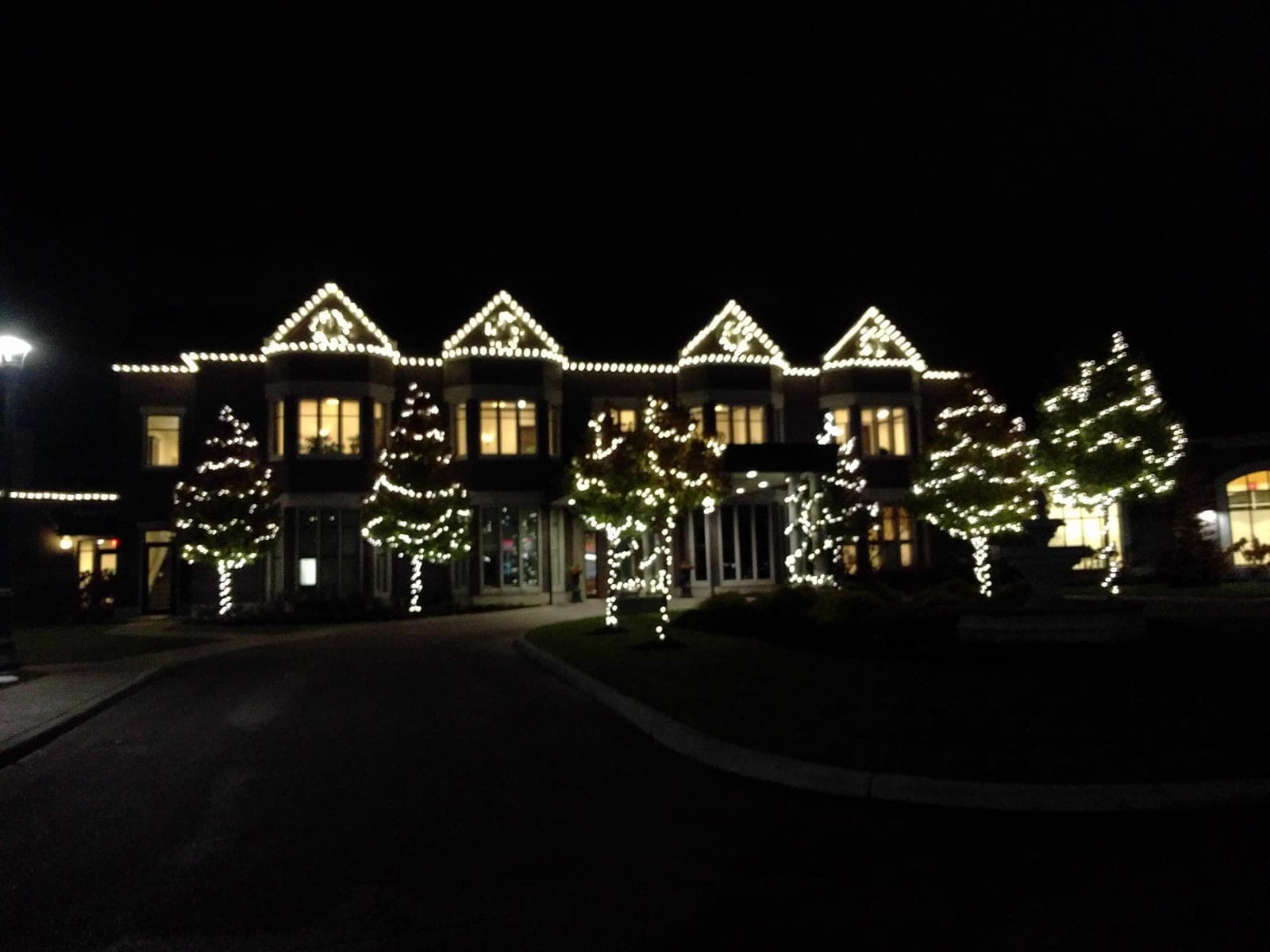
Every fall, property managers and hotel operators book the same roofline job: a crew, a lift, hundreds of feet of lights, a takedown in January and a bin of tangled strands in storage. Permanent LED lighting changes that cycle. A hidden track system installs once, lights the building architecturally all year and changes colour by app for holidays, events and seasons. This guide covers where permanent lighting makes sense on commercial buildings, how the hardware works, the safety case for 12V and how to compare the cost against seasonal installs over five years.
Where permanent lighting fits
Permanent roofline lighting suits buildings with a clean linear edge, such as a fascia, a soffit or a parapet, and an owner who wants the building lit more than just in December. The best-fit property types are the ones where the building itself is the advertisement.
- Plazas and retail strips: a continuous roofline across multiple tenants unifies the property and replaces separate tenant decorations.
- Hotels: a warm white or colour-changing edge defines the building at night and supports events such as weddings and conferences.
- Dealerships: a bright, consistent roofline makes the lot visible from the road, and team or brand colours can be set to match manufacturer campaigns.
- Restaurants and pubs: warm white all year, with colour scenes for game nights and holidays.
- Offices and medical buildings: low, understated white lighting that adds security and curb appeal without looking like a sign.
It is a weaker fit for buildings with very short or very broken roof edges, heavily textured cladding with no flat fascia, or leases that are shorter than two or three years. In those cases, seasonal C9 lighting remains the practical choice.
How the system works
Our sister brand Forever Lights supplies the permanent systems, and Holiday Light Supplies carries the kits in the permanent lighting kits category. The system has four parts.
- Aluminum track: 42 inch pieces that mount to the soffit or fascia with screws. A 100 ft run uses about 29 pieces. The track is the visible part, which is why finish matters.
- Pucks: each 42 inch track piece carries five pucks, spaced roughly 8 inches apart. Each puck is a small, RGBW LED light that sits inside the track and glows outward.
- Power supplies: 150 W, 12V supplies installed in a weatherproof location, typically near an interior panel or in the attic, and connected to the pucks by low-voltage cable.
- WiFi controller: connects the system to a phone app, where you set colours, brightness, scenes and schedules.
Kits run from 50 ft to 250 ft. A 50 ft kit suits a single storefront or a small restaurant frontage, and a 250 ft kit covers a mid-size plaza edge or a hotel face. Larger buildings can combine kits. Kit prices range from 1,455 to 3,629 CAD, and installation is done either by Forever Lights or as a DIY job by your own maintenance or electrical contractor.
Hidden by day: matching the track to the fascia
A common objection to permanent lighting is the look of the hardware in daylight. The answer is to colour-match the track to the fascia or soffit. Because the pucks sit inside the track and the track is mounted in the soffit or tucked under the fascia edge, the system reads as part of the building rather than as an add-on. At night, the light appears to come from the architecture itself.
When you plan the layout, look at four things: where the soffit overhang is deep enough to hide the track, where the roofline changes height or direction, how corners and returns will be handled and where the power supplies can sit. A quick photo walk around the building, with measured lengths for each run, is enough for a first quote.
RGBW scenes for the whole year
RGBW means each puck has red, green, blue and a dedicated white LED. The white channel gives a cleaner, more natural white than mixing red, green and blue, which matters for the default look of most commercial buildings. Colour scenes then come from the app, scheduled automatically, and a manager can switch them in seconds.
- Default: warm white year-round at a lower brightness, to define the building without glare.
- Canada Day: red and white, alternating by section or solid red with white accents.
- Halloween: orange and purple from early October to November 1.
- Christmas and winter: warm white with red and green, or cool white for a snow look. Layer in seasonal commercial décor at ground level for a complete scheme.
- Team colours: a local junior team, a university or a hockey playoff run can be set within minutes, with no crew booking.
- Events: a hotel can run a wedding in the couple's colours for one night and return to the default the next day.
The schedule feature lets you automate all of this. Set Canada Day for June 28 to July 2, Halloween for October 15 to November 1 and Christmas for the last week of November to early January, and the building changes without a call to a contractor. It is a practical benefit for property managers who handle many buildings and do not want a calendar of install dates.
Why 12V matters for safety and permitting
The track and pucks run at 12V low voltage. Only the power supplies connect to 120V mains, and they sit indoors or in a protected enclosure. For a public-facing building, that matters for three reasons. First, the lighting at the roofline has no mains voltage at the point where rain, ice and people meet it. Second, low-voltage wiring is simpler to install and inspect than line-voltage runs across a roof edge. Third, if a puck is damaged by an impact, a contractor can replace it without shutting down the whole building.
Check with your local building department and your insurer about any permitting or notification requirements before installation. Requirements vary by municipality, and for larger or heritage buildings it is worth a short phone call before the quote.
Five-year cost: permanent versus seasonal
The sensible way to compare is over five years, since a permanent system is a capital purchase and a seasonal install is a recurring service. For seasonal roofline lighting, add the annual cost of the installer or in-house crew, the lift rental, the replacement of failed bulbs and strands, the takedown in January and the storage space. Multiply the total by five.
- Permanent: kit cost (1,455 to 3,629 CAD), plus installation by Forever Lights or your contractor, plus a small allowance for repairs and any electrician time for the power supplies.
- Seasonal: annual install, annual takedown, annual lift or crew time, replacement stock and storage. These recur every year and tend to rise with labour rates.
- Break-even years = (permanent kit + installation) divided by (annual seasonal spend minus annual running cost of the permanent system).
- Illustration only: if a property currently spends 2,000 per year on a seasonal roofline, five seasons come to 10,000. Compare that with your actual quote for the permanent kit and install. Use your own contract figures, since roofline length and access vary widely.
The permanent system also earns value in the eleven months a seasonal roofline is not up. A lit building is more visible, safer to approach after dark and more attractive to evening customers. Those benefits are harder to price, but they are the reason many hotels and dealerships choose permanent systems outright.
A practical example: a plaza with 180 ft of continuous fascia needs about 52 track pieces (180 ft x 12 inches / 42 inches, rounded up), which means 260 pucks at five per piece. A 250 ft kit would cover it with spare track for corners and returns. Walk the roofline with a tape or a measuring wheel before you request a quote, count every inside and outside corner, and note any section where a downspout, sign or fixture interrupts the fascia, because each of those affects how the track is cut and joined.
How to get started
Measure the linear feet of roofline you want to light, take photos of each elevation and note where power supplies could sit. Add the right kit size to your cart on the permanent lighting kits page and submit an inquiry, or contact Forever Lights directly for an installed quote. The team replies by email, usually within one business day, with shipping cost, timeline and volume pricing. Free shipping applies on orders over $150, and property managers can ask for multi-building pricing on the property managers page.
Frequently asked questions
What does a permanent LED lighting kit include?
Kits from 50 to 250 ft include 42 inch aluminum track pieces with five pucks each, 150 W power supplies and a WiFi controller. The system is controlled by an app for colours, brightness and schedules.
Is permanent roofline lighting safe in Canadian winters?
Yes. The track and pucks run at 12V low voltage and are mounted in the soffit or fascia, and only the power supplies connect to mains. Check with your local building department about any permitting requirements.
Can permanent lighting change colour for different holidays?
Yes. RGBW pucks support scenes such as red and white for Canada Day, orange and purple for Halloween, Christmas colours and team colours. Scenes can be scheduled in the app so the building changes automatically.
How much do permanent lighting kits cost?
Kit prices range from 1,455 to 3,629 CAD depending on size, from 50 to 250 ft. Installation is extra and can be done by Forever Lights or by your own contractor.
Is permanent lighting cheaper than seasonal installs?
Over about five years it often is, because it removes annual install, takedown, storage and replacement costs. Compare your actual seasonal contract multiplied by five with the kit and installation quote.
Put it into an order
Everything in this guide ships from London, Ontario.
Commercial-grade C9, displays, pole décor, wreaths and garland, quoted line by line with freight within one business day.
Keep reading
Commercial planning · 9 min
Commercial Christmas Decorations Budget: A Planning Guide for Canada
Malls, BIAs and municipalities rarely overspend on the decorations themselves. The overruns come from labour, power, storage and replacement. This guide gives CAD planning ranges per pole, tree and entrance, plus a three-season phasing model.
Commercial planning · 9 min
BIA Holiday Lighting Guide: What Actually Works on a Canadian Main Street
A downtown display has to survive wind, salt and tight sidewalks while giving shoppers a reason to stay. This guide covers the four display types that work on a main street, the permissions and power details, and a timeline that starts in September.
Commercial planning · 9 min
Shopping Mall Christmas Decorations: A Checklist for Centre Managers
A mall display is a traffic-management project as much as a decorating one. This checklist covers atrium tree sizing, Santa set and photo-op layout, walk-through displays, fire-rated materials, lead times and how to refresh themes without rebuying everything.